
- Home
- Procedures
- Hemorrhoid surgery in Tijuana
Hemorrhoid surgery in Tijuana
Haemorrhoidectomy and procedures for advanced haemorrhoidal disease, when diet, hygiene and topical treatment no longer control the bleeding or the prolapse.
First: not everything that bleeds is haemorrhoids
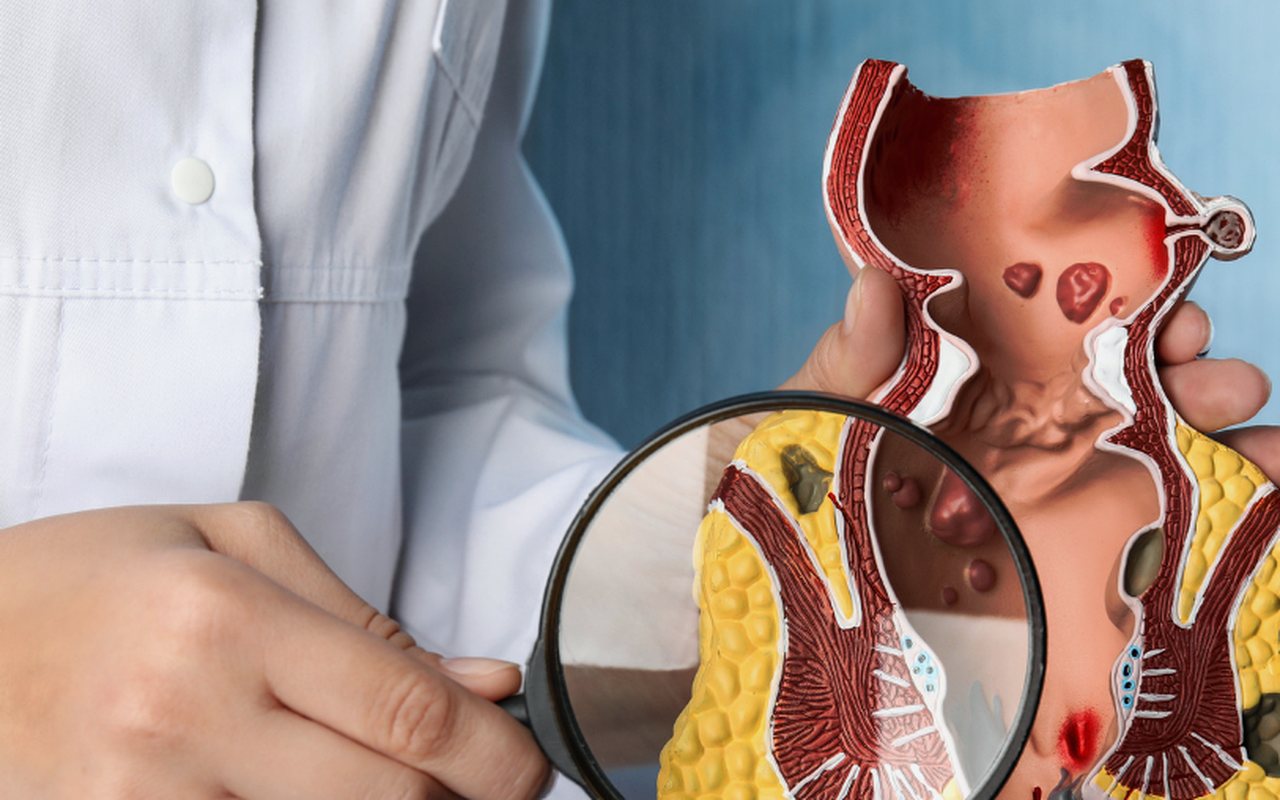
Haemorrhoids are normal vascular structures of the anal canal. The problem appears when they dilate, bleed or prolapse. They are extraordinarily common and, in most cases, managed without surgery: fibre, water, avoiding prolonged straining on the toilet, sitz baths and topical treatment.
But here is a point this site will repeat without apology: attributing any rectal bleeding to haemorrhoids is dangerous. Colorectal cancer bleeds, and at the stages where it is curable, it bleeds little. ALL RECTAL BLEEDING IN AN ADULT, ESPECIALLY AFTER 45, SHOULD BE INVESTIGATED, even when the patient has visible haemorrhoids. Having haemorrhoids does not protect you from having something else.
When surgery is indicated
Haemorrhoidal disease is graded by prolapse. Early grades, with occasional bleeding and no permanent prolapse, are treated conservatively or with office procedures such as rubber band ligation.
Surgery is considered in advanced grades: haemorrhoids that prolapse and do not reduce on their own or can no longer be pushed back, repeated bleeding causing anaemia, recurrent haemorrhoidal thrombosis, and mixed internal and external disease that does not respond. Also in thrombosed haemorrhoids with severe pain, where the procedure resolves the acute episode.
The operation and an honest account of recovery
Several techniques exist: open or closed haemorrhoidectomy, procedures using advanced energy devices, and fixation techniques. The choice depends on the grade, on whether the disease is internal, external or mixed, and on how many columns are involved.
It is worth telling the truth about recovery, because it is the part that surprises people most: haemorrhoidectomy hurts, especially during the first bowel movements, and the pain can last one to three weeks. It is managed with scheduled analgesia, sitz baths, gentle laxatives to keep stools soft and a high-fibre diet. Knowing this in advance is the difference between a hard recovery and a frightening one.
What the procedure involves
When it is indicated
- Advanced-grade haemorrhoids with prolapse that does not reduce
- Repeated rectal bleeding of confirmed haemorrhoidal origin, with or without anaemia
- Recurrent haemorrhoidal thrombosis or thrombosis with severe pain
- Mixed internal and external disease unresponsive to medical treatment
- Haemorrhoids with persistent hygiene difficulty, itching and discharge
- Failure of previous office procedures
Techniques and resources
- Anoscope and proctological examination equipment
- Advanced energy device
- Rubber band ligation
- Multimodal analgesic regimen
- Sitz baths and bulk-forming laxatives
Frequently asked questions about hemorrhoid surgery
The operation is performed under anaesthesia, so there is no pain during the procedure. Recovery does hurt, and saying otherwise would help no one: this is the anal operation best known for it. What can be done is to control it well, with analgesia scheduled before the pain appears and local measures.
In many cases yes, and that is the first aim of the consultation. Fibre, water, not sitting on the toilet for long periods, treating constipation and topical treatment resolve most early presentations. Surgery enters when those measures, properly applied, are no longer enough.
Painless bleeding with bowel movements is typical of internal haemorrhoids and is usually benign. But it is also how other diagnoses present, and those are worth ruling out. That is why rectal bleeding is investigated rather than assumed.
Bring your studies and settle the question
One consultation with your ultrasound or CT in hand is worth more than ten internet searches. Book by phone or through the form and you will be told what is there, what it means and what your options are.