
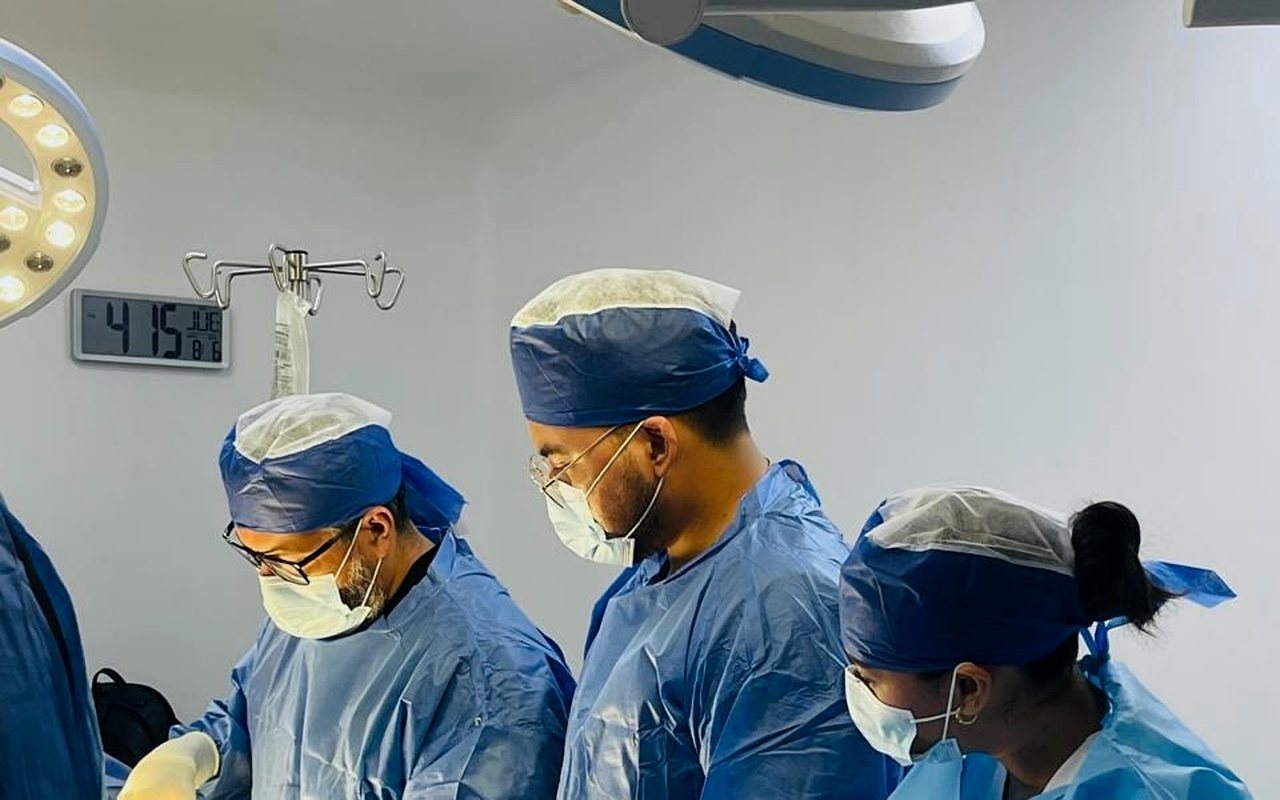
Inguinal hernia surgery
The wall defect is closed and reinforced with mesh. A truss does not cure a hernia: it only hides it.
See the procedure
A lump that appears on straining and disappears on lying down. It does not heal on its own, a truss will not close it, and its one serious risk is becoming trapped.
A hernia is the protrusion of abdominal contents through a weak point in the wall. It takes its name from where it happens: inguinal in the groin, femoral just below, umbilical at the navel, epigastric in the upper midline, and incisional over the scar of a previous operation. All share the same logic: there is a hole in a layer of tissue.
That explains why no non-surgical treatment resolves them. No medication, exercise or truss closes an anatomical defect. Trusses and belts only contain the lump while worn and, over time, can make later repair harder. The only definitive solution is to close and reinforce the wall.
Diagnosis is usually made on physical examination: the lump is seen and felt on straining or coughing, standing up. In small hernias, in patients with obesity, or in complex and recurrent hernias, it is supported by ultrasound or CT, which also measures the defect and helps plan the repair.
The procedures that may be indicated for this condition. Which one applies to you — if any does — is decided on your imaging and your examination.
The wall defect is closed and reinforced with mesh. A truss does not cure a hernia: it only hides it.
See the procedure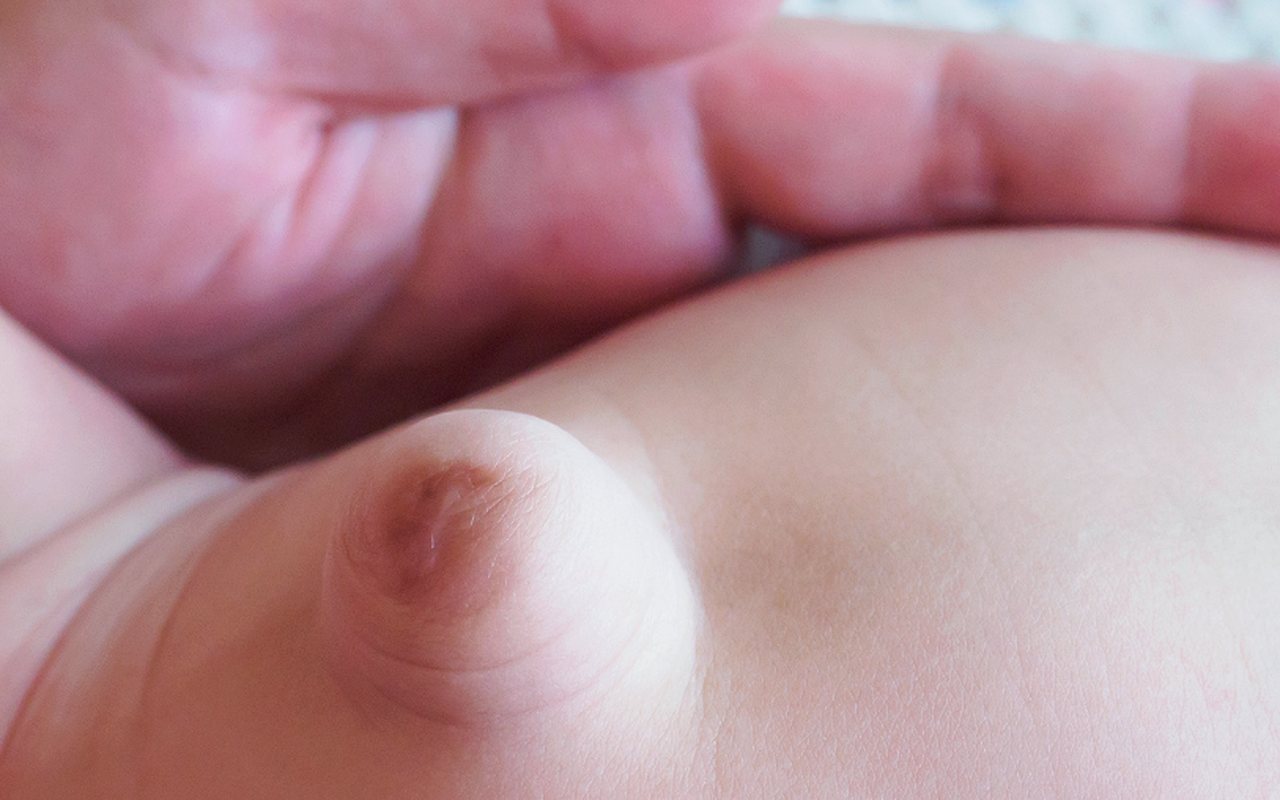
The navel is the weakest point of the midline. The defect is closed and reinforced when size demands it.
See the procedure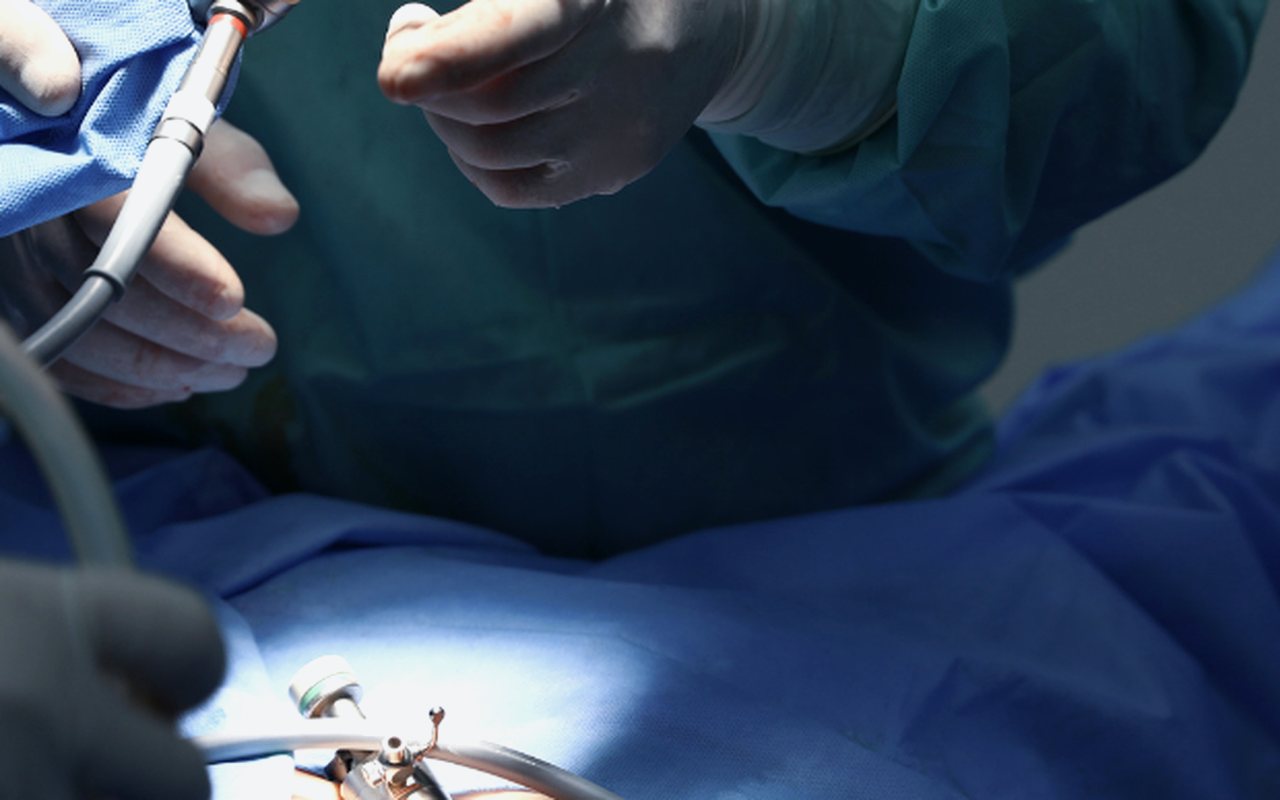
An incisional hernia comes out through the scar of a previous operation. It is repaired with mesh and prior planning.
See the procedure
There are abdominal presentations measured in hours. This is the list of the ones that cannot wait for Monday's appointment.
See the procedureSEVERE ABDOMINAL PAIN THAT DOES NOT LET UP, fever with pain in the right side of the abdomen, VOMITING THAT PREVENTS KEEPING FLUIDS DOWN, distension with no gas or bowel movements, A HERNIA THAT HAS TURNED HARD AND CANNOT BE PUSHED BACK IN, or vomiting or stool WITH BLOOD. Go to an emergency department immediately and call (662) 282-1787.
Waiting is reasonable in selected cases: small hernias, without symptoms, in patients at high surgical risk. But the bargain is worth understanding: the hernia will not close, it will grow over time, and while it exists there is a risk of it becoming trapped. Most of those who wait end up operated on anyway, only with a larger hernia and sometimes as an emergency.
Physical activity does not cause hernias on its own, though it can make an existing one more obvious. With a diagnosed hernia it is sensible to avoid maximal-load exercises and straining with held breath, and to consider repair if it limits your activity.
It can recur, although current mesh techniques have greatly reduced that possibility. The factors that most increase recurrence are smoking, obesity, premature exertion after surgery and uncontrolled chronic cough.
No. In small children many umbilical hernias close on their own during the first years and watchful waiting is usual. Infant inguinal hernia, by contrast, is operated on, and its management belongs to paediatric surgery.
One consultation with your ultrasound or CT in hand is worth more than ten internet searches. Book by phone or through the form and you will be told what is there, what it means and what your options are.