
- Home
- Advanced laparoscopic surgery in Tijuana
Advanced laparoscopic surgery in Tijuana
Surgery through millimetre incisions, with a camera and magnified vision. Less pain, fewer days in hospital and a faster return to normal life — when the case allows it.
What laparoscopy is, and what makes it «advanced»
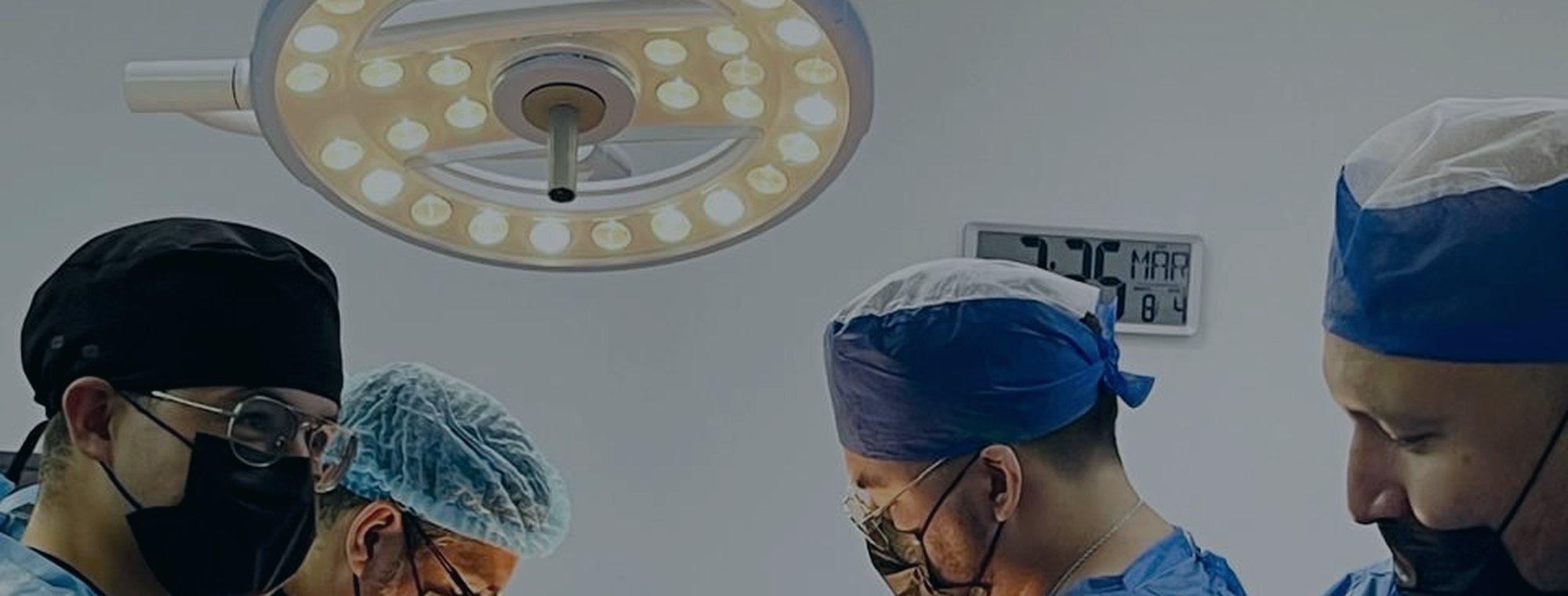
Laparoscopic surgery is performed through three or four incisions of between five and twelve millimetres. One admits the camera, which projects the inside of the abdomen onto a monitor under magnification; the others admit the instruments. The abdomen is insufflated with carbon dioxide to create the working space.
It is called advanced when it goes beyond basic procedures: hiatal hernia repair and fundoplication, resection of colonic segments, bariatric surgery, complex hernias with mesh, small-bowel surgery and tumour resection. It demands more training, more operating time and better instrumentation than a routine cholecystectomy, and not every general surgeon offers it.
Which procedures use it
Advanced laparoscopy is used across a wide range of procedures: removal of the gallbladder (cholecystectomy); repair of inguinal, abdominal and hiatal hernias; colorectal surgery for Crohn's disease, ulcerative colitis, diverticulitis and cancer; bariatric surgery for the treatment of obesity; and tumour removal.
It also applies to appendicectomy, to small-bowel surgery for obstruction or tumour, and to diagnostic exploration of the abdomen when the studies do not quite explain the picture. In some settings the laparoscopic route is shared with other specialties — gynaecological, urological and thoracic procedures — which this practice coordinates with the corresponding specialist.
What the patient gains, and what to know
The advantages are well documented: less postoperative pain, less need for strong analgesics, a shorter hospital stay, small scars, a lower rate of wound infection and an earlier return to work and physical activity. In many procedures discharge comes within 24 hours, and some are done as day surgery.
The other side has to be said too. Operating time is usually longer, especially in complex procedures. In some patients the carbon dioxide produces referred shoulder pain for a day or two, which is uncomfortable but resolves on its own. And there is always the possibility of converting to open surgery if safety demands it. None of this is small print: it is explained at the pre-operative visit.
When it is NOT the best option
Laparoscopy is not superior at everything. There are circumstances where open surgery is the right decision from the outset: very advanced inflammation with unrecognisable anatomy, dense adhesions from multiple previous operations, active bleeding, haemodynamic instability, large tumours and some cases of obstruction with a very distended bowel.
Choosing the route well is part of the surgeon's job, and sometimes the choice is made once inside. A surgeon who never converts is not necessarily better: he may be one who persists when he should not. A conversion decided in time is a sign of judgement, not of failure.
What advanced laparoscopy covers
Cholecystectomy
Removal of the gallbladder, the commonest laparoscopic procedure.
Inguinal and abdominal hernias
Mesh repair by laparoscopy in selected cases.
Hiatal hernia and fundoplication
Repair of the hiatus and an anti-reflux valve for GERD.
Colorectal surgery
Resection of colonic segments for diverticulitis, Crohn's, colitis and cancer.
Bariatric surgery
Gastric sleeve and bypass, performed entirely laparoscopically.
Appendicectomy
Removal of the appendix through three incisions, usually discharged in 24 hours.
Small-bowel surgery
Obstruction, adhesions and tumours of the small intestine.
Tumour removal
Resection of intra-abdominal lesions with histopathological study.
Bring your studies and settle the question
One consultation with your ultrasound or CT in hand is worth more than ten internet searches. Book by phone or through the form and you will be told what is there, what it means and what your options are.