

Hemorrhoid surgery
Not every haemorrhoid needs surgery. The ones that do bleed repeatedly, prolapse and stay out, or thrombose.
See the procedure
Bleeding on passing stool, a lump that comes out, burning and itching. Most are managed without surgery — but no rectal bleeding should be assumed to be haemorrhoids without investigation.
Haemorrhoids are normal vascular structures of the anal canal that contribute to continence. They become disease when they dilate, bleed, prolapse or thrombose. It is one of the commonest conditions in adults, and also one of those most often delayed out of embarrassment.
The factors that most influence it are constipation with prolonged straining, spending time sitting on the toilet, a low-fibre diet, pregnancy, overweight and repeated heavy lifting. A good share of initial treatment consists precisely of correcting those factors.
One point deserves insistence here: not all rectal bleeding is haemorrhoidal. Colorectal cancer bleeds, and at the stages where it is curable it bleeds little and without pain. ALL RECTAL BLEEDING IN AN ADULT, ESPECIALLY AFTER 45 OR WITH A FAMILY HISTORY, SHOULD BE INVESTIGATED. Having visible haemorrhoids does not rule out also having something else.
The procedures that may be indicated for this condition. Which one applies to you — if any does — is decided on your imaging and your examination.
Not every haemorrhoid needs surgery. The ones that do bleed repeatedly, prolapse and stay out, or thrombose.
See the procedure
The diseased segment is resected and continuity restored. Where there is cancer, margins and lymphadenectomy rule.
See the procedure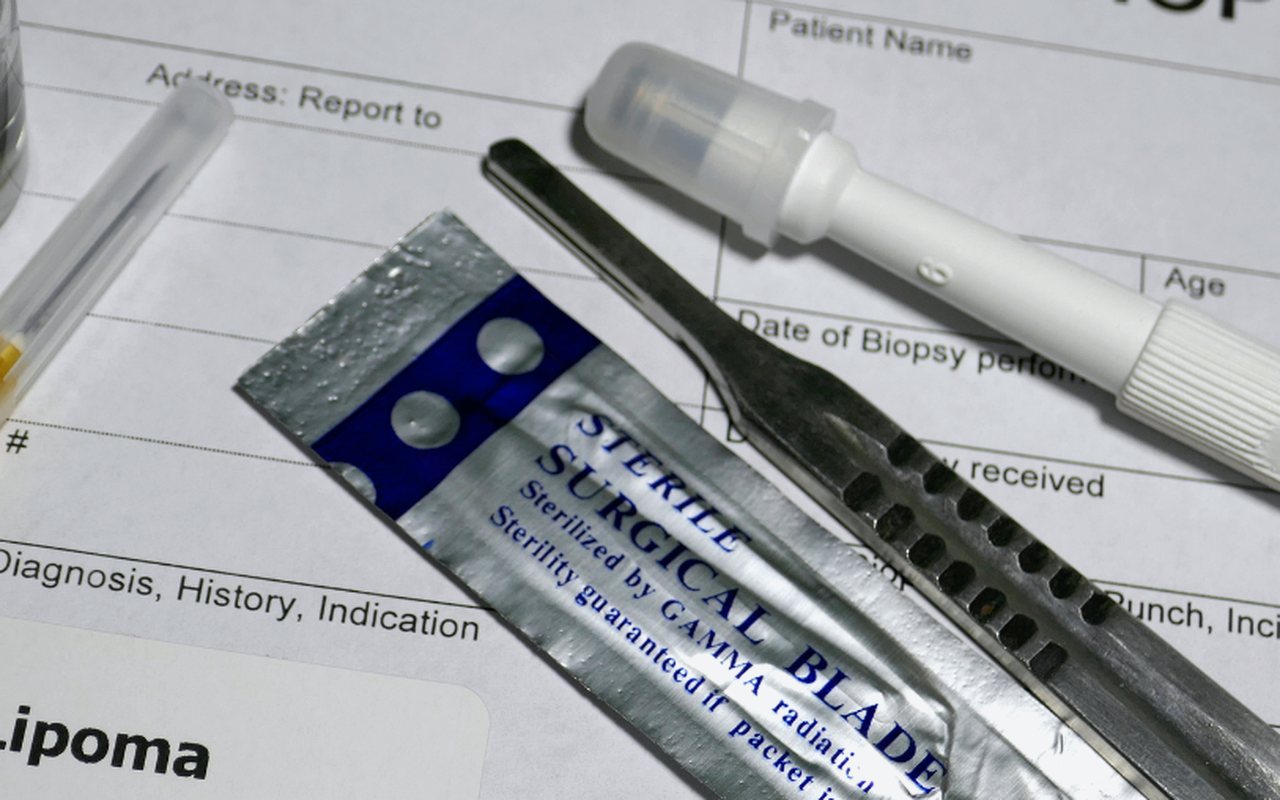
Without a histological diagnosis there is no correct treatment. The biopsy answers the question: what exactly is this.
See the procedureSEVERE ABDOMINAL PAIN THAT DOES NOT LET UP, fever with pain in the right side of the abdomen, VOMITING THAT PREVENTS KEEPING FLUIDS DOWN, distension with no gas or bowel movements, A HERNIA THAT HAS TURNED HARD AND CANNOT BE PUSHED BACK IN, or vomiting or stool WITH BLOOD. Go to an emergency department immediately and call (662) 282-1787.
Acute episodes usually settle with conservative measures, and many patients spend years with occasional, well-controlled symptoms. What does not disappear on its own is established prolapse in the advanced grades: there, correction is surgical.
They relieve the symptom — burning, itching, inflammation — and are useful in acute episodes. They do not correct prolapse or eliminate the haemorrhoidal column. In other words: they help, but they do not cure.
It is the commonest reason a simple problem becomes a complicated one. Proctological examination is brief, carried out with respect and privacy, and it is the only way to know the grade and to rule out other causes of bleeding. Delaying it does not change the diagnosis, only postpones it.
With rectal bleeding after 45, with any bleeding accompanied by a change in bowel habit, weight loss or anaemia, and where there is a family history of colorectal cancer or polyps. Also as screening according to the current recommendation for your age.
One consultation with your ultrasound or CT in hand is worth more than ten internet searches. Book by phone or through the form and you will be told what is there, what it means and what your options are.